To be, or not to be, that is question!

Cast Kenneth Branagh, Julie Christie, Kate Winslet, Sir Derek Jacobi, Brian Blessed, Judi
Dench. Director Kenneth Branagh. Kenneth Branagh leads an all-star cast in this full-length
production of William Shakespeare's greatest tragedy, the story of Danish prince Hamlet.
Hamlet (Branagh--Harry Potter and the Chamber of Secrets, Rabbit-Proof Fence) returns
home to learn that his father, the King, has recently died and his mother, Gertrude
(Academy Award winner Julie Christie--Dr. Zhivago, Finding Neverland), has already
married his uncle, Claudius (Derek Jacobi--Gosford Park, "Breaking the Code"). Suffering
from shock and grief, the young prince is visited by the ghost of his father (Brian Blessed--
Macbeth, Henry V), who claims that he was murdered by Claudius and who demands
vengeance. Now, Hamlet must decide whether this tale told by an apparition is true--and
whether he should exact the vengeance his father demands.

Dench. Director Kenneth Branagh. Kenneth Branagh leads an all-star cast in this full-length
production of William Shakespeare's greatest tragedy, the story of Danish prince Hamlet.
Hamlet (Branagh--Harry Potter and the Chamber of Secrets, Rabbit-Proof Fence) returns
home to learn that his father, the King, has recently died and his mother, Gertrude
(Academy Award winner Julie Christie--Dr. Zhivago, Finding Neverland), has already
married his uncle, Claudius (Derek Jacobi--Gosford Park, "Breaking the Code"). Suffering
from shock and grief, the young prince is visited by the ghost of his father (Brian Blessed--
Macbeth, Henry V), who claims that he was murdered by Claudius and who demands
vengeance. Now, Hamlet must decide whether this tale told by an apparition is true--and
whether he should exact the vengeance his father demands.


"To be, or not to be?" That's a question many of us are familiar with and can recognize right
away as one of Shakespeare's many classic lines. But this beyond-talented writer, poet,
and playwright provided plenty of other quotable gems—after all, he wasn't called the
"Bard of Avon" for nothing! The 125 best William Shakespeare quotes will refresh your
memory with some of his best lines, and surprise you with others you didn't even realize
were written by him! From Romeo and Juliet to King Lear to Macbeth to all of his stunning
sonnets and other works, William Shakespeare's top spot in the literary world has been
solidified for centuries.


The plot is based on an Italian tale written by Matteo Bandello and translated into verse as
The Tragical History of Romeus and Juliet by Arthur Brooke in 1562 and retold in prose in
Palace of Pleasure by William Painter in 1567. Romeo and Juliet belongs to a tradition of
tragic romances stretching back to antiquity. Today, the title characters are regarded as
archetypal young lovers. It was among Shakespeare's most popular plays during his
lifetime and, along with Hamlet, is one of his most frequently performed plays. Romeo
and Juliet is a tragedy written by William Shakespeare early in his career about the
romance between two Italian youths from feuding families.


Shakespeare’s King Lear challenges us with the magnitude, intensity, and sheer duration of
the pain that it represents. Its figures harden their hearts, engage in violence, or try to
alleviate the suffering of others. Lear himself rages until his sanity cracks. What, then,
keeps bringing us back to King Lear? For all the force of its language, King Lear is almost
equally powerful when translated, suggesting that it is the story, in large part, that draws
us to the play.


away as one of Shakespeare's many classic lines. But this beyond-talented writer, poet,
and playwright provided plenty of other quotable gems—after all, he wasn't called the
"Bard of Avon" for nothing! The 125 best William Shakespeare quotes will refresh your
memory with some of his best lines, and surprise you with others you didn't even realize
were written by him! From Romeo and Juliet to King Lear to Macbeth to all of his stunning
sonnets and other works, William Shakespeare's top spot in the literary world has been
solidified for centuries.

The Tragical History of Romeus and Juliet by Arthur Brooke in 1562 and retold in prose in
Palace of Pleasure by William Painter in 1567. Romeo and Juliet belongs to a tradition of
tragic romances stretching back to antiquity. Today, the title characters are regarded as
archetypal young lovers. It was among Shakespeare's most popular plays during his
lifetime and, along with Hamlet, is one of his most frequently performed plays. Romeo
and Juliet is a tragedy written by William Shakespeare early in his career about the
romance between two Italian youths from feuding families.

the pain that it represents. Its figures harden their hearts, engage in violence, or try to
alleviate the suffering of others. Lear himself rages until his sanity cracks. What, then,
keeps bringing us back to King Lear? For all the force of its language, King Lear is almost
equally powerful when translated, suggesting that it is the story, in large part, that draws
us to the play.

Julius Caesar marks several departures for Shakespeare from his previous practice as a
playwright. He had tried his hand only once before with classical subject matter, in Titus
Andronicus, but he would eventually write three plays based on Plutarch's Lives of the Noble
Grecians and Romans, from which he drew for the first time in Julius Caesar. Shakespeare's
poetic imagination is the third topic, especially as it manifests itself in the imagery and
symbolism of Julius Caesar. Finally, the introduction turns to the implicit sense of Rome
that comes through in Shakespeare's Roman plays.

playwright. He had tried his hand only once before with classical subject matter, in Titus
Andronicus, but he would eventually write three plays based on Plutarch's Lives of the Noble
Grecians and Romans, from which he drew for the first time in Julius Caesar. Shakespeare's
poetic imagination is the third topic, especially as it manifests itself in the imagery and
symbolism of Julius Caesar. Finally, the introduction turns to the implicit sense of Rome
that comes through in Shakespeare's Roman plays.


Though a staple in high school English classes, Julius Caesar is not a simple play. Seemingly
irreconcilable forces are at work: fate and free will, the changeableness and stubbornness
of ambitious men, the demands of public service and the desire for private gain. Drawn from
history as recorded by Plutarch, the major characters-Caesar, Brutus, Cassius, and Mark
Antony-are complex, as are the twists and turns of their fortunes. What kind of man rises
to power? What price does he pay when he becomes a politician? These questions raised by
Shakespeare are relevant in every age, whether ancient Rome, Elizabethan England,
or even in our own day.


The setting: Rome, 44 BC, during the Roman Republic, not the Roman Empire. Julius Caesar
was not emperor, there was no Roman emperor; he was the greatest military leader of
his day, who was becoming increasingly powerful and popular. A group of Senators and
Generals fear Caesar will soon be made King, and so, ostensibly for the love of Rome,
they plot Caesars death. They need Brutus to join the conspiracy if they hope to keep the
peace in the aftermath. But you probably know the outcome. Ironically, the attempt to
preserve the republic, causes its demise and ushers in the Roman Empire (or dictatorship),
when Caesar’s adopted son Octavius becomes the first Roman Emperor, Caesar Augustus.


irreconcilable forces are at work: fate and free will, the changeableness and stubbornness
of ambitious men, the demands of public service and the desire for private gain. Drawn from
history as recorded by Plutarch, the major characters-Caesar, Brutus, Cassius, and Mark
Antony-are complex, as are the twists and turns of their fortunes. What kind of man rises
to power? What price does he pay when he becomes a politician? These questions raised by
Shakespeare are relevant in every age, whether ancient Rome, Elizabethan England,
or even in our own day.

was not emperor, there was no Roman emperor; he was the greatest military leader of
his day, who was becoming increasingly powerful and popular. A group of Senators and
Generals fear Caesar will soon be made King, and so, ostensibly for the love of Rome,
they plot Caesars death. They need Brutus to join the conspiracy if they hope to keep the
peace in the aftermath. But you probably know the outcome. Ironically, the attempt to
preserve the republic, causes its demise and ushers in the Roman Empire (or dictatorship),
when Caesar’s adopted son Octavius becomes the first Roman Emperor, Caesar Augustus.

Much Ado About Nothing is a comedy by William Shakespeare thought to have been written in 1598 and 1599. The play was included in the First Folio, published in 1623. The play is set in Messina and revolves around two romantic pairings that emerge when a group of soldiers arrive in the town. The first, between Claudio and Hero, is nearly scuppered by the accusations of the villain, Don John. The second, between Claudio's friend Benedick and Hero's cousin Beatrice, takes centre stage as the play continues, with both characters' wit and banter providing much of the humour.


Much Ado About Nothing includes two quite different stories of romantic love. Hero and
Claudio fall in love almost at first sight, but an outsider, Don John, strikes out at their
happiness. Beatrice and Benedick are kept apart by pride and mutual antagonism until
others decide to play Cupid. All this from William Shakespeare she was an English
playwright, poet, and actor. He is widely regarded as the greatest writer in the English
language and the world's pre-eminent dramatist. He is often called England's national
poet and the "Bard of Avon" (or simply "the Bard"). His extant works, including
collaborations, consist of some 39 plays, 154 sonnets, three long narrative poems,
and a few other verses, some of uncertain authorship.


Summer has come to London (although the British weather hasn’t had the memo). These
long, light evenings are the cue for the ever-wonderful Iris Theatre to roll out the red
carpet for another of their outdoor Shakespeare plays, performed as promenade
productions in and around the Actors’ Church in Covent Garden. This year’s show is Much
Ado, probably my favourite play, and as a longstanding fan of the company I just
couldn’t resist. Moreover, the play has already enjoyed critical acclaim, with four
nominations for the Off West End Awards. It was bound to be a good night out so
I marshalled my visiting parents and we set off for an evening of Iris’s very
special brand of magic.


Claudio fall in love almost at first sight, but an outsider, Don John, strikes out at their
happiness. Beatrice and Benedick are kept apart by pride and mutual antagonism until
others decide to play Cupid. All this from William Shakespeare she was an English
playwright, poet, and actor. He is widely regarded as the greatest writer in the English
language and the world's pre-eminent dramatist. He is often called England's national
poet and the "Bard of Avon" (or simply "the Bard"). His extant works, including
collaborations, consist of some 39 plays, 154 sonnets, three long narrative poems,
and a few other verses, some of uncertain authorship.

long, light evenings are the cue for the ever-wonderful Iris Theatre to roll out the red
carpet for another of their outdoor Shakespeare plays, performed as promenade
productions in and around the Actors’ Church in Covent Garden. This year’s show is Much
Ado, probably my favourite play, and as a longstanding fan of the company I just
couldn’t resist. Moreover, the play has already enjoyed critical acclaim, with four
nominations for the Off West End Awards. It was bound to be a good night out so
I marshalled my visiting parents and we set off for an evening of Iris’s very
special brand of magic.
(mh%3dFDu_iglhP3tgW-DH)0.jpg&cdnurl=https%3a%2f%2fth.bing.com%2fth%2fid%2fR.05aca9ee0e0081aa9b1441f36dcb3875%3frik%3dMpMO3zLjFRd7Dw%26pid%3dImgRaw%26r%3d0&exph=720&expw=1280&q=Hamlet+Act+III+Scene&simid=608027053526357297&FORM=IRPRST&ck=2F56C265E7E6A8E8913DAAA02CA535CF&selectedIndex=61&itb=0&adtq=1)
the English national poet


Henry V (born September 16?, 1387, Monmouth, Monmouthshire, Wales—died August 31,
1422, Bois de Vincennes, France) was the king of England (1413–22) of the house of
Lancaster, son of Henry IV. As victor of the Battle of Agincourt (1415, in the Hundred
Years’ War with France), he made England one of the strongest kingdoms in Europe.
Catherine was the daughter of King Charles VI of France and Isabella of Bavaria and was
much neglected in childhood because of her father’s frequent bouts of madness and
her mother’s selfish indifference. After his accession to the English throne (March 1413),
Henry V renewed the negotiations for his marriage to Catherine started by his father,
Henry IV.

For a woman who had such a profound effect on a whole country, she is surprisingly
enigmatic. Catherine of Valois changed royal history forever but even now, centuries on,
the prevailing image of her is the one created by Shakespeare for whom this French
princess was a pretty pawn in a political drama. But what little we do know seems
to indicate that the ‘fair Kate’ of Henry V was every bit as ambitious, determined,
courageous and interesting as the king she married and the royal family she later
created. And it all started with a wedding, exactly six hundred years ago.


The Tragedy of Macbeth closely follows events detailed in the William Shakespeare play. All
written by Shakespeare. Thane of Glamis, who, reacting to a prophecy by three witches and
the urging of his wife, kills the Scottish king Duncan and usurps the throne. Lady Macbeth
initially provokes her husband into slaying Duncan (“When you durst do it, then you were
a man”) but is later alarmed by Macbeth’s behavioural changes and haunted by her role
in the regicide.

Videos of Did Macbeth Killed Lady 
Duncan’s death is discovered. This showboating sequence is packed with geometrical
compositions that emphasise the ascent and descent of Macbeth. The king’s room is at
the top of a flight of stairs. Below, Macbeth’s general Banquo (Bertie Carvel), Lady Macbeth
and Duncan’s son Malcolm (Henry Melling) receive Macbeth’s version of events. Malcom
wisely flees the castle soon after.


Lady Macbeth sits in a shaft of clear light, almost pleading a boy child for mercy. Alarmingly
enough, one of the witches is a young girl who meets Fleance in the woods before he heads
towards Malcolm’s castle. “I think Macbeth has always been a study of ambition and power,
and I thought there would be something really interesting in seeing how that could arise
from trauma and grief, a sense of loss – of a child…Macbeth goes about destroying
families and the big thing is that he doesn’t have one,”


Shakespearean sonnet examples can help you understand this ancient and beautiful poetic
form. Get inspired by looking at sonnets written by Shakespeare as well as sonnets by
other authors in the classic form he made famous. You’ll also gain a better understanding
of the “rules” of this type of poetry. Also called English sonnets, these represent one of
the classic poetic forms.Shakespearean Sonnet Definition: A Simple Explanation. A
Shakespearean sonnet, such as the example below, has specific guidelines for its form.
The number of lines, the rhyme scheme, the rhythm, and even the content fit together
perfectly to make this type of poem.

Videos of Best Shakespeare Sonnets to Analyze 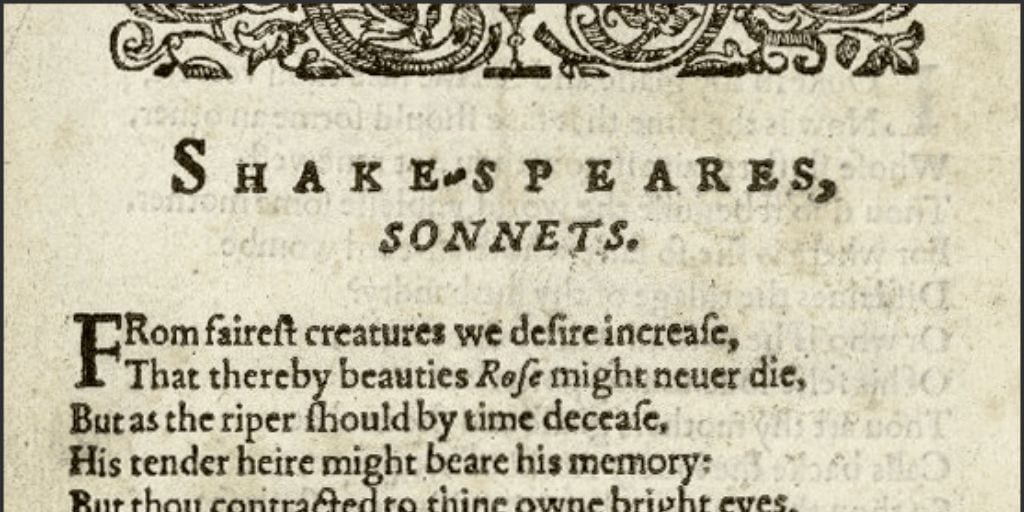
What is a Shakespearean sonnet? Shakespeare’s sonnets are poems of expressive ideas
and thoughts that are layered with multiple meanings, and always have two things in
common. Sonnet 1: From Fairest Creatures We Desire Increase. Sonnet 2: When Forty
Winters Shall Besiege Thy Brow. Sonnet 3: Look In Thy Glass, And Tell The Face Thou
Viewest. Sonnet 4: Unthrifty Loveliness, Why Dost Thou Spend. Sonnet 5: Those Hours,
That With Gentle Work Did Frame. Sonnet 6: Then Let Not Winter’s Ragged Hand Deface.
Sonnet 7: Lo! In The Orient When The Gracious Light. Sonnet 8: Music To Hear, Why
Hear’st Thou Music Sadly? Sonnet 9: Is It For Fear To Wet A Widow’s Eye. Sonnet
10: For Shame Deny That Thou Bear’st Love To Any. Sonnet 11: As Fast As Thou Shalt
Wane, So Fast Thou Grow. Sonnet 12: When I Do Count The Clock That Tells Time.


Shakespeare's sonnets are considered a continuation of the sonnet tradition that swept
through the Renaissance from Petrarch in 14th-century Italy and was finally introduced
in 16th-century England by Thomas Wyatt and was given its rhyming metre and division
into quatrains by Henry Howard. Shakespeare wrote 154 sonnets published in his ‘quarto’
in 1609, covering themes such as the passage of time, mortality, love, beauty, infidelity,
and jealousy. The first 126 of Shakespeare’s sonnets are addressed to a young man, and
the last 28 addressed to a woman – a mysterious ‘dark lady’.

Henry V (born September 16?, 1387, Monmouth, Monmouthshire, Wales—died August 31,
1422, Bois de Vincennes, France) was the king of England (1413–22) of the house of
Lancaster, son of Henry IV. As victor of the Battle of Agincourt (1415, in the Hundred
Years’ War with France), he made England one of the strongest kingdoms in Europe.
Catherine was the daughter of King Charles VI of France and Isabella of Bavaria and was
much neglected in childhood because of her father’s frequent bouts of madness and
her mother’s selfish indifference. After his accession to the English throne (March 1413),
Henry V renewed the negotiations for his marriage to Catherine started by his father,
Henry IV.

1422, Bois de Vincennes, France) was the king of England (1413–22) of the house of
Lancaster, son of Henry IV. As victor of the Battle of Agincourt (1415, in the Hundred
Years’ War with France), he made England one of the strongest kingdoms in Europe.
Catherine was the daughter of King Charles VI of France and Isabella of Bavaria and was
much neglected in childhood because of her father’s frequent bouts of madness and
her mother’s selfish indifference. After his accession to the English throne (March 1413),
Henry V renewed the negotiations for his marriage to Catherine started by his father,
Henry IV.


For a woman who had such a profound effect on a whole country, she is surprisingly
enigmatic. Catherine of Valois changed royal history forever but even now, centuries on,
the prevailing image of her is the one created by Shakespeare for whom this French
princess was a pretty pawn in a political drama. But what little we do know seems
to indicate that the ‘fair Kate’ of Henry V was every bit as ambitious, determined,
courageous and interesting as the king she married and the royal family she later
created. And it all started with a wedding, exactly six hundred years ago.

enigmatic. Catherine of Valois changed royal history forever but even now, centuries on,
the prevailing image of her is the one created by Shakespeare for whom this French
princess was a pretty pawn in a political drama. But what little we do know seems
to indicate that the ‘fair Kate’ of Henry V was every bit as ambitious, determined,
courageous and interesting as the king she married and the royal family she later
created. And it all started with a wedding, exactly six hundred years ago.
The Tragedy of Macbeth closely follows events detailed in the William Shakespeare play. All
written by Shakespeare. Thane of Glamis, who, reacting to a prophecy by three witches and
the urging of his wife, kills the Scottish king Duncan and usurps the throne. Lady Macbeth
initially provokes her husband into slaying Duncan (“When you durst do it, then you were
a man”) but is later alarmed by Macbeth’s behavioural changes and haunted by her role
in the regicide.
written by Shakespeare. Thane of Glamis, who, reacting to a prophecy by three witches and
the urging of his wife, kills the Scottish king Duncan and usurps the throne. Lady Macbeth
initially provokes her husband into slaying Duncan (“When you durst do it, then you were
a man”) but is later alarmed by Macbeth’s behavioural changes and haunted by her role
in the regicide.


Duncan’s death is discovered. This showboating sequence is packed with geometrical
compositions that emphasise the ascent and descent of Macbeth. The king’s room is at
the top of a flight of stairs. Below, Macbeth’s general Banquo (Bertie Carvel), Lady Macbeth
and Duncan’s son Malcolm (Henry Melling) receive Macbeth’s version of events. Malcom
wisely flees the castle soon after.
Lady Macbeth sits in a shaft of clear light, almost pleading a boy child for mercy. Alarmingly
enough, one of the witches is a young girl who meets Fleance in the woods before he heads
towards Malcolm’s castle. “I think Macbeth has always been a study of ambition and power,
and I thought there would be something really interesting in seeing how that could arise
from trauma and grief, a sense of loss – of a child…Macbeth goes about destroying
families and the big thing is that he doesn’t have one,”

compositions that emphasise the ascent and descent of Macbeth. The king’s room is at
the top of a flight of stairs. Below, Macbeth’s general Banquo (Bertie Carvel), Lady Macbeth
and Duncan’s son Malcolm (Henry Melling) receive Macbeth’s version of events. Malcom
wisely flees the castle soon after.

enough, one of the witches is a young girl who meets Fleance in the woods before he heads
towards Malcolm’s castle. “I think Macbeth has always been a study of ambition and power,
and I thought there would be something really interesting in seeing how that could arise
from trauma and grief, a sense of loss – of a child…Macbeth goes about destroying
families and the big thing is that he doesn’t have one,”
Shakespearean sonnet examples can help you understand this ancient and beautiful poetic
form. Get inspired by looking at sonnets written by Shakespeare as well as sonnets by
other authors in the classic form he made famous. You’ll also gain a better understanding
of the “rules” of this type of poetry. Also called English sonnets, these represent one of
the classic poetic forms.Shakespearean Sonnet Definition: A Simple Explanation. A
Shakespearean sonnet, such as the example below, has specific guidelines for its form.
The number of lines, the rhyme scheme, the rhythm, and even the content fit together
perfectly to make this type of poem.

form. Get inspired by looking at sonnets written by Shakespeare as well as sonnets by
other authors in the classic form he made famous. You’ll also gain a better understanding
of the “rules” of this type of poetry. Also called English sonnets, these represent one of
the classic poetic forms.Shakespearean Sonnet Definition: A Simple Explanation. A
Shakespearean sonnet, such as the example below, has specific guidelines for its form.
The number of lines, the rhyme scheme, the rhythm, and even the content fit together
perfectly to make this type of poem.


What is a Shakespearean sonnet? Shakespeare’s sonnets are poems of expressive ideas
and thoughts that are layered with multiple meanings, and always have two things in
common. Sonnet 1: From Fairest Creatures We Desire Increase. Sonnet 2: When Forty
Winters Shall Besiege Thy Brow. Sonnet 3: Look In Thy Glass, And Tell The Face Thou
Viewest. Sonnet 4: Unthrifty Loveliness, Why Dost Thou Spend. Sonnet 5: Those Hours,
That With Gentle Work Did Frame. Sonnet 6: Then Let Not Winter’s Ragged Hand Deface.
Sonnet 7: Lo! In The Orient When The Gracious Light. Sonnet 8: Music To Hear, Why
Hear’st Thou Music Sadly? Sonnet 9: Is It For Fear To Wet A Widow’s Eye. Sonnet
10: For Shame Deny That Thou Bear’st Love To Any. Sonnet 11: As Fast As Thou Shalt
Wane, So Fast Thou Grow. Sonnet 12: When I Do Count The Clock That Tells Time.
Shakespeare's sonnets are considered a continuation of the sonnet tradition that swept
through the Renaissance from Petrarch in 14th-century Italy and was finally introduced
in 16th-century England by Thomas Wyatt and was given its rhyming metre and division
into quatrains by Henry Howard. Shakespeare wrote 154 sonnets published in his ‘quarto’
in 1609, covering themes such as the passage of time, mortality, love, beauty, infidelity,
and jealousy. The first 126 of Shakespeare’s sonnets are addressed to a young man, and
the last 28 addressed to a woman – a mysterious ‘dark lady’.

and thoughts that are layered with multiple meanings, and always have two things in
common. Sonnet 1: From Fairest Creatures We Desire Increase. Sonnet 2: When Forty
Winters Shall Besiege Thy Brow. Sonnet 3: Look In Thy Glass, And Tell The Face Thou
Viewest. Sonnet 4: Unthrifty Loveliness, Why Dost Thou Spend. Sonnet 5: Those Hours,
That With Gentle Work Did Frame. Sonnet 6: Then Let Not Winter’s Ragged Hand Deface.
Sonnet 7: Lo! In The Orient When The Gracious Light. Sonnet 8: Music To Hear, Why
Hear’st Thou Music Sadly? Sonnet 9: Is It For Fear To Wet A Widow’s Eye. Sonnet
10: For Shame Deny That Thou Bear’st Love To Any. Sonnet 11: As Fast As Thou Shalt
Wane, So Fast Thou Grow. Sonnet 12: When I Do Count The Clock That Tells Time.

through the Renaissance from Petrarch in 14th-century Italy and was finally introduced
in 16th-century England by Thomas Wyatt and was given its rhyming metre and division
into quatrains by Henry Howard. Shakespeare wrote 154 sonnets published in his ‘quarto’
in 1609, covering themes such as the passage of time, mortality, love, beauty, infidelity,
and jealousy. The first 126 of Shakespeare’s sonnets are addressed to a young man, and
the last 28 addressed to a woman – a mysterious ‘dark lady’.


Comments
Post a Comment